Emergency Plumbing Checklist: What to Do Before the Plumber Arrives
Views : 318
Emergency Plumbing Checklist: Quick Answer
If you're dealing with a plumbing emergency right now, do this first:
- Shut off your main water valve — stops the flow immediately, wherever the leak is
- Cut power to the affected area if water is near outlets, panels, or appliances
- Find the source — burst pipe, supply line, water heater, or fixture
- Contain the water with towels, buckets, or a wet/dry vac
- Call a licensed 24/7 emergency plumber and describe what you're seeing
Do these five things before anything else. Everything below explains why and what comes next.
Table of Contents
- Why Plumbing Emergencies Should Never Be Ignored
- Step-by-Step Checklist Before the Plumber Arrives
- Traditional vs. Emergency Plumbing Response
- Common Mistakes During Plumbing Emergencies
- How to Choose an Emergency Plumber
- Expert Tips to Stay Prepared
- The Future of Emergency Plumbing
- Frequently Asked Questions
Why Plumbing Emergencies Should Never Be Ignored
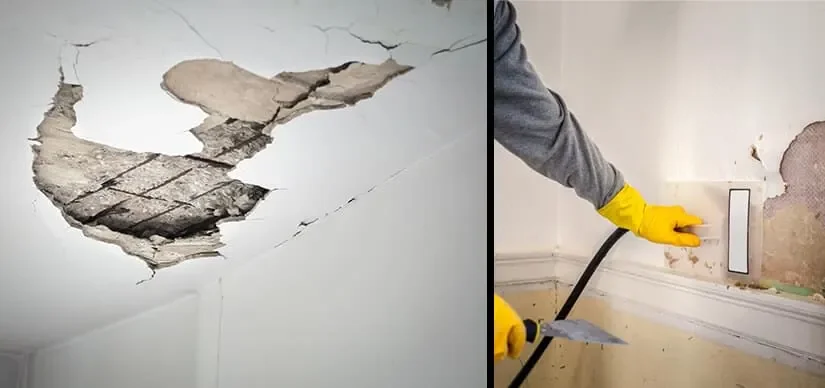
Water damage doesn't stay contained. A leak that looks minor at 9 p.m. can soak subfloor, insulation, and drywall by midnight. Left long enough, standing water becomes a mold problem — and mold remediation almost always costs more than the original repair.
There's a structural side to this too. Water traveling through wall cavities and under flooring weakens framing and warps materials that aren't designed to dry out on their own. The longer water sits, the more of the house it touches.
Cost follows the same curve. A same-night repair is often a few hundred dollars. The same problem, ignored for a weekend, can turn into replaced flooring, repainted walls, and a mold inspection — easily several thousand.
Insurance adds one more wrinkle: most homeowners' policies cover sudden, accidental water damage, but they expect you to act reasonably once you know there's a problem. Documented delay can complicate a claim. That's one more reason a fast call to an emergency plumber isn't overreacting — it's protecting the claim as much as the house.
Step-by-Step Checklist Before the Plumber Arrives
1. Shut Off the Main Water Valve
This is the single most important thing you can do. It stops water at the source, no matter where the leak is in the house.
In most U.S. homes, the main shut-off valve is located where the water line enters the house — commonly the basement, a utility closet, near the water heater, or outside near the foundation on a slab home. Turn it clockwise until it stops.
Skip this step, and every other action is just damage control while water keeps flowing.
2. Identify the Source of the Water Leak
Once the water's off, figure out what actually failed. A visible burst pipe under a kitchen sink is obvious. A slab leak, a failing water heater, or a leak inside a wall is not.
Watch for signs of a hidden leak: a warm spot on the floor, a spike in your water bill, the sound of running water with every fixture off, or a musty smell that wasn't there before.
Be careful around standing water near outlets, appliances, or the electrical panel until you've addressed step 3. The EPA's WaterSense program has useful guidance on spotting the kinds of small leaks that, left unchecked, often turn into emergencies.
3. Turn Off Electricity if Water Is Nearby
Water and electricity are a genuinely dangerous combination. If water is pooling near outlets, appliances, or a breaker panel, shut off power to that area at the breaker box — don't just unplug things.
Never step into standing water to reach a switch, outlet, or appliance that's still powered. If the panel itself is wet or you're not confident which breaker controls the area, cut power to the whole house and let the plumber or an electrician sort it out safely.
4. Control Water Spread Immediately
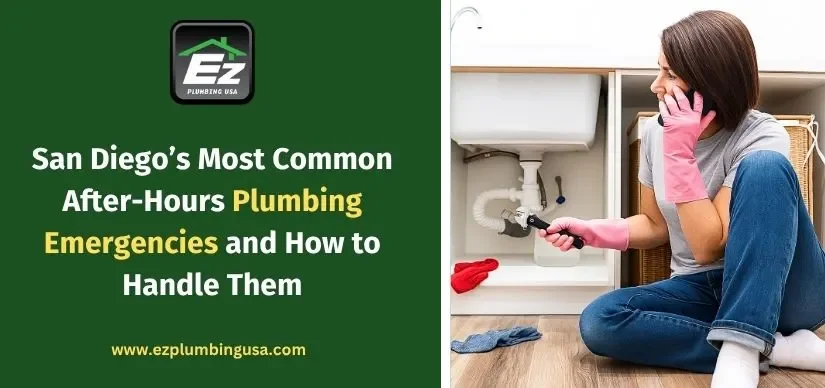
With the water and, if needed, the power off, slow the spread. Towels, buckets, and a wet/dry vacuum are your first line of defense. Move furniture, rugs, electronics, and anything absorbent out of the affected area.
In a basement or lower level, check whether water is heading toward a floor drain — if so, clear any debris blocking it.
5. Call a 24/7 Emergency Plumber
Once the immediate danger is under control, call a licensed emergency plumbing service in San Diego. Response speed varies by city and time of day, but most established emergency plumbing services aim to reach urgent calls within one to two hours.
When you call, be specific: mention that the main valve is shut off, roughly where the leak is, whether electricity is involved, and how much water is present. This lets the dispatcher send someone with the right equipment the first time.
6. Document the Damage for Insurance
While you wait for the plumber, keep documenting. Photograph the water level, the source, and any affected belongings or materials. If water is still receding, take timestamped photos every 30–60 minutes to show progression.
This record matters far more than most homeowners expect — it's often the difference between a smooth insurance claim and a disputed one.
7. Avoid DIY Pipe Fixes on Major Leaks
A small drip under a sink might be fine to tape or clamp temporarily. A burst supply line, a failed water heater fitting, or a cracked main is not a DIY job.
Improvised fixes on major leaks tend to fail under pressure, and depending on your area, non-permitted plumbing work can create code violations — most U.S. jurisdictions base their requirements on the Uniform Plumbing Code maintained by IAPMO — that complicate a home sale or insurance claim later. They can also mask the real extent of the damage, so a repair that looks fine on the surface leaves hidden water behind a wall.
8. Drain Remaining Water Safely
If water has pooled in a basement or lower area, only drain it once you've confirmed the main valve is off and the source is controlled. Use a sump pump, wet/dry vac, or gravity drainage toward a floor drain — never toward electrical equipment or outlets.
In a finished basement with significant flooding, it's often safer to let the plumber or a water damage crew handle extraction, especially if the water may be contaminated (from a sewer backup, for example). Both the American Red Cross and FEMA's Ready.gov publish detailed safety guidance for handling contaminated floodwater, which is worth reviewing if your situation involves more than a contained pipe leak.
9. Ventilate the Area
Mold can begin forming within 24–48 hours in a damp, unventilated space. Open windows if weather allows, run fans, and use a dehumidifier if you have one.
Move wet materials — rugs, boxes, furniture — away from walls so air can circulate behind them, and pull up wet carpet if it's safe to do so.
10. Prepare Access for the Plumber
Clear a path to the affected area and to the main shut-off valve. Move furniture, boxes, or clutter out of the way. If the leak is behind a wall or under a cabinet, clear that cabinet out ahead of time.
The faster the plumber can assess and access the problem, the faster the actual repair starts.
Traditional vs. Emergency Plumbing Response (USA)
| Factor | Traditional Plumbing Service | Emergency Plumbing Response |
|---|---|---|
| Response time | Scheduled, often 1–3 days out | Typically 1–2 hours, 24/7 |
| Damage control | Damage continues until the appointment | Damage is contained on the same day |
| Cost impact | Lower service call, higher total damage risk | Higher service call, lower total damage risk |
| Equipment readiness | Standard toolkit for scheduled work | Stocked for burst pipes, leak detection, and extraction |
| Availability | Business hours only | Nights, weekends, holidays |
| Insurance outcome | Delay can complicate claims | Fast action supports claim documentation |
| Risk level | Higher — water damage compounds daily | Lower — issue addressed at the source quickly |
Common Mistakes During Plumbing Emergencies
- Ignoring a small leak, assuming it will hold until morning
- Delaying the call to an emergency plumber to "see if it stops"
- Not shutting off the main valve immediately
- Using the wrong tools — pliers and tape are not a substitute for a proper fitting
- Standing in water near outlets or the electrical panel
- Skipping documentation, then struggling to support an insurance claim
- Over-tightening pipe fittings, which can crack fittings and make the leak worse
- Waiting for regular business hours on something actively flooding a room
How to Choose an Emergency Plumber (USA Checklist)
Not every plumber who answers the phone at midnight is the right call. A provider that also offers ongoing residential plumbing service — not just one-off emergency dispatch — tends to know your home's plumbing history and can spot recurring issues faster. Before you hire, check for:
- 24/7 availability — confirmed, not just advertised
- Licensed and insured in your state
- Realistic response time commitment for your area
- Service area coverage that actually includes your location
- Transparent, upfront pricing — including emergency/after-hours rates
- Experience with your specific issue (burst pipes, water heaters, sewer backups)
- Verifiable customer reviews, not just a star rating on the homepage
- A written warranty on the repair itself
A few minutes of checking these before you're mid-emergency saves a lot of regret afterward.
Expert Tips to Stay Prepared
- Know exactly where your main shut-off valve is — walk to it right now if you're not sure
- Save a trusted emergency plumber's number in your phone
- Install water leak detectors near water heaters, washing machines, and under sinks
- Inspect exposed pipes each season, especially before winter
- Insulate exposed pipes in unheated spaces before cold weather hits
- Skip chemical drain cleaners — they can damage older pipes and make future repairs harder
- Keep a basic plumbing kit on hand: adjustable wrench, pipe tape, a few compression fittings
- Understand what your homeowner's insurance actually covers before you need it
- Watch your water bill for unexplained spikes — one of several early signs of a plumbing issue worth acting on before it becomes an emergency
- Schedule an annual plumbing inspection, especially in homes over 15 years old
The Future of Emergency Plumbing
Emergency plumbing is shifting from reactive to predictive. Smart leak sensors now sit under sinks and water heaters, sending a phone alert the moment moisture is detected — often before a homeowner would notice anything. Whole-home water monitoring systems track usage patterns and can shut off the main valve automatically if they detect a burst-pipe-level flow.
On the service side, dispatch systems increasingly use real-time routing to get the nearest available plumber to an emergency faster, and some providers are testing predictive maintenance — flagging aging water heaters or corroding pipes before they fail. None of this replaces the fundamentals in this checklist, but it's shrinking the gap between "something's wrong" and "help is on the way."
Conclusion
Plumbing emergencies aren't about luck — they're about how fast you respond in the first ten minutes. Shut off the water, cut power if needed, contain the spread, and call a licensed emergency plumber. Everything else — documentation, drying, drainage — follows from getting those first steps right.
The homeowners who come out of an emergency with the least damage aren't the ones who panic fastest. They're the ones who already knew where their shut-off valve was.
If you're dealing with a plumbing emergency right now, contact us, and we'll get a licensed plumber to you as fast as possible.
Frequently Asked Questions
1. What should I do in a plumbing emergency at home?
Shut off your main water valve immediately, then cut power to any area where water is pooling near outlets or the electrical panel. Identify the source of the leak if it's safe to do so, and use towels or a wet/dry vac to control the spread. Call a licensed 24/7 emergency plumber once the immediate danger is contained, and document the damage with photos for insurance purposes.
2. How do I shut off the water in an emergency?
Locate your main shut-off valve — commonly in the basement, a utility closet, near the water heater, or outside near the foundation on slab homes — and turn it clockwise until it stops. This cuts off the water to the entire house, which is the fastest way to stop a leak regardless of where it's occurring. It's worth locating and labeling this valve before an emergency happens.
3. When should I call an emergency plumber?
Call immediately for burst pipes, active flooding, sewage backups, a failed water heater leaking heavily, or any leak near electrical components. For smaller, contained leaks — like a slow drip under a sink — you may be able to wait for regular business hours, but if you're unsure, it's safer to call and ask.
4. How fast can a plumber respond in an emergency?
Most established emergency plumbing services aim to respond within one to two hours, though this varies by city, time of day, and how many active calls they're handling. Response times are typically faster in dense metro areas and slower in rural regions. Confirming the expected response time when you call helps set realistic expectations.
5. Can a burst pipe cause serious damage?
Yes. A burst pipe can release hundreds of gallons of water per hour, and that volume moves quickly into flooring, drywall, and insulation. Left unaddressed for even a few hours, it can lead to warped floors, damaged ceilings below, and the start of mold growth within 24–48 hours.
6. What are signs of a hidden water leak?
Common signs include an unexplained increase in your water bill, the sound of running water when all fixtures are off, warm or damp spots on flooring, a musty smell, or visible mold in areas that shouldn't be damp. Hidden leaks behind walls or under slabs often go unnoticed until the damage is already significant.
7. Is emergency plumbing available 24/7 in the USA?
Yes, most metro and suburban areas across the U.S. have licensed plumbers offering 24/7 emergency service, including nights, weekends, and holidays. Availability and response speed can vary in more rural areas, so it's worth confirming coverage for your specific location ahead of time.
8. How much does an emergency plumber cost?
Emergency and after-hours service calls typically cost more than standard daytime appointments, often with a dispatch or emergency fee on top of the repair itself. Exact pricing varies widely by region and provider, so ask for an upfront estimate — including any after-hours surcharge — before work begins.
9. Can I fix a burst pipe myself temporarily?
For very minor leaks, a pipe clamp or rubber patch can serve as a short-term measure. For a genuine burst pipe under pressure, DIY fixes are not reliable and can fail or worsen the leak. The safer approach is to shut off the main valve and wait for a licensed plumber rather than attempting a repair on a major line.
10. Does homeowners insurance cover plumbing emergencies?
Most homeowner's policies cover sudden, accidental water damage — such as a burst pipe — but typically exclude damage from long-term neglect or gradual leaks you should have noticed. Acting quickly and documenting the damage supports your claim; check your specific policy for coverage limits and exclusions.
Category
Recent Posts