Pipes carrying water run under the concrete slab of your house. A slab leak is when one of these pipes starts to leak. The leak is beneath the concrete floor, so you can't see it directly. If a pipe leaks under the slab, it can cause water damage to the house. It might lead to mold, damage to the floor, or higher water bills.
You might notice water pooling on the floor, a hot spot on the floor (if the leak is from a hot water pipe), or hear running water when no faucets are on. If you think you have a slab leak, it's essential to call a plumber. They can use special tools to find and fix the leak without tearing up too much of the floor.
Pipe Corrosion — Over time, pipes under the slab can corrode. This happens because of the chemicals in the water or the soil. Corrosion weakens the pipes, leading to leaks.
Soil Movement — The ground under your house can shift or move. This movement puts pressure on the pipes, causing them to crack or break.
High Water Pressure — If the water pressure in the pipes is too high, it can stress the pipes. This pressure can eventually cause the pipes to leak.
Faulty Pipe Installation — If pipes were not installed properly, they might have weak spots or be poorly aligned, which can lead to leaks over time.
Concrete Cracking — The concrete slab itself can crack due to settling or other reasons. When this happens, it can put extra pressure on the pipes, causing them to leak.
Damage Repair — Fixing the leak often means repairing the damage caused by the water. This might include fixing floors, walls, or even furniture.
Increased Water Bills — While the leak is happening, you might have high water bills because of the wasted water.
Property Damage — Water from the leak can damage your home, by causing mold or weakening the foundation. Repairing this damage can be expensive.
Temporary Relocation — Sometimes, repairs are so extensive that you might need to stay elsewhere while the work is done. This can add extra costs for temporary housing.
Unexpected Repairs — Other issues might be found during the repair process, leading to more repairs and higher costs than initially expected.
Additional Services — You may need extra services, like cleaning up after the leak or treating mold, which can increase the overall cost.
Slab leak actually occurs in the pipes beneath the slab and remains undetected till it gets worse because pipes in the walls, under the sink, crawl spaces, etc. are not inspected from time to time.
If you want to check out slab leak signs, some of them include the sound of water flow near the walls, cracks or stains or dampness on walls or floors, the presence of moisture on the floors, foul smell, and bugs near the sewer area. If you notice an unaccounted-for increase in your water bills, you should call an expert.
You should shut all water supply connections or not use water for a couple of hours and see if your water meter is still indicating water usage. Don't hesitate to call EZ Plumbing USA if you find any problems. We recommend slab leak inspection at fixed intervals to ensure that you never face unexpected slab leak problems that could demand an expensive repair job. Prevent late detection of slab leak problems that could also damage the main areas of your property. Call us and schedule slab leak repair in Riverside.
We use non-intrusive techniques to assure you of the most efficient services without any need for digging up floors or walls. Depending on the leak size and location we recommend repiping, rerouting, repairing, or coating the pipes. Call EZ Plumbing USA for Slab Leak Detection Riverside.
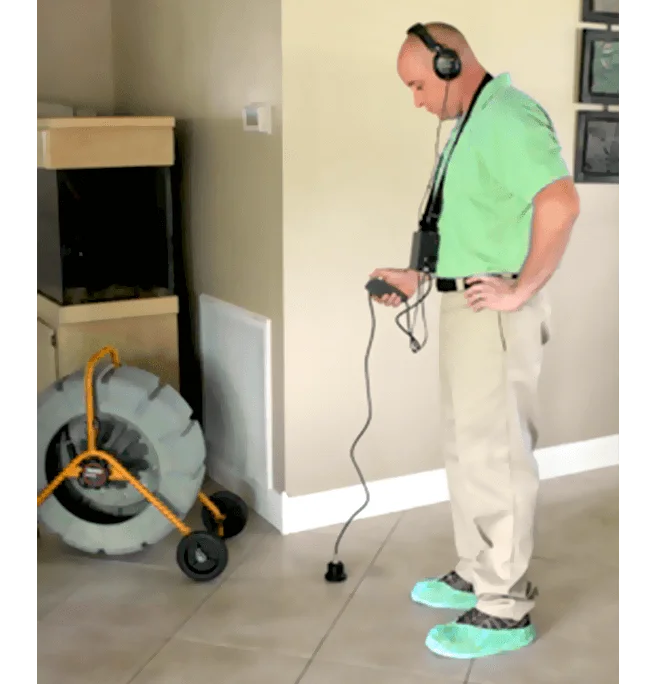
Electronic Tools — Special electronic devices are used to detect leaks. These tools can sense changes in temperature and sound.
Heat Detection — Some tools find leaks by detecting heat. A leaking pipe with hot water will appear as a warm spot on the floor.
Sound Detection — Other tools listen for the sound of water escaping from a pipe. These sounds help locate the leak.
Non-Damaging — This method is precise and usually doesn't require breaking up the floor. It helps find the leak quickly without unnecessary damage.
Detect the Leak — First, we use special tools to find exactly where the leak is under the concrete.
Access the Pipes — Next, we need to get to the pipes. We might carefully cut into the floor to reach them.
Fix the Leak — Once we find the leak, we repair or replace the damaged pipe. This stops the leak from continuing.
Check for Damage — We look for any additional damage caused by the leak, like water damage to floors or walls.
Repair the Floor — After fixing the pipes, we put the floor back together. We fill in the cut area and make it look as close to the original as possible.
Test Everything — Finally, we tested the repaired pipes to ensure that there were no more leaks and that everything was working correctly.
Spot Repair — We cut into the slab where the leak is and fix just that part of the pipe. This method is used if the damage is small and isolated.
Pipe Lining — This involves inserting a unique liner into the old pipe. The liner hardens and seals the leak from the inside.
Pipe Replacement — If the pipe is badly damaged, we might replace it with a new one. This usually involves cutting through the slab to remove and install the new pipe.
Epoxy Coating — We apply an epoxy coating to the inside of the pipe to seal any leaks. This method is suitable for more minor leaks and does not require removing the pipe.
We have skilled plumbers who know how to handle slab leaks efficiently.
We use the latest technology to find and fix leaks accurately without unnecessary damage.
We respond quickly to your call and work fast to repair the leak and prevent further damage.
We ensure high-quality repairs that last, so you don't have to worry about recurring issues.
We focus on providing excellent customer service and ensuring you are happy with our work.
We offer competitive prices and precise estimates so you know what to expect before we start.