The Ultimate Guide to Cleaning Your KitchenAid Dishwasher Filter
Views : 1380
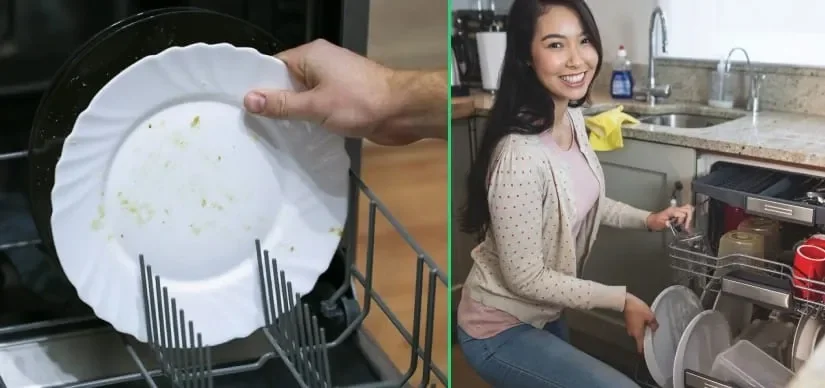
If your dishes are coming out gritty, your dishwasher smells musty, or water is standing in the bottom after a cycle, a dirty KitchenAid dishwasher filter is almost certainly the cause. Most homeowners don't realize their dishwasher has a manual filter that needs regular cleaning — and KitchenAid's own data shows that a neglected filter is the #1 reason for poor wash performance in their dishwasher lineup. This guide covers everything: where the filter is, how to clean it step by step, and how often to do it.
Does a KitchenAid Dishwasher Have a Filter?
Yes — all KitchenAid dishwashers manufactured after 2010 use a manual filtration system (not the older self-cleaning grinder). This means you are responsible for removing and cleaning the filter — it does not clean itself. If you've been asking, does my KitchenAid dishwasher have a filter? — it does, and it's likely overdue for cleaning.
The filter system has two components located at the bottom center of the dishwasher tub near the lower spray arm. Together they trap food particles and prevent them from recirculating onto your dishes or damaging the wash pump.
Where Is the Filter on a KitchenAid Dishwasher?
- Upper Cylindrical Filter: A round tube that twists and lifts out — catches larger food pieces
- Lower Flat Mesh Filter: A flat fine-mesh panel beneath the cylindrical unit — filters fine particles and silt
To access: remove the lower dish rack, locate the filter assembly in the center-back of the tub floor. The cylindrical filter has an arrow marking its lock direction.
Step-by-Step: How to Clean a KitchenAid Dishwasher Filter
Here's the complete process for cleaning the filter on a KitchenAid dishwasher:
What You'll Need
- Soft-bristle brush or old toothbrush
- Dish soap
- Warm water
- White vinegar (for hard water deposits)
Step 1 — Remove the Lower Rack
Pull the bottom rack fully out and set aside to expose the tub floor.
Step 2 — Remove the Cylindrical Filter
Grip the top of the cylindrical filter, rotate counterclockwise approximately ¼ turn until it releases, then lift straight up and out.
Step 3 — Remove the Flat Mesh Filter
Lift the flat mesh filter straight up from its housing — no twisting required.
Step 4 — Clean Both Components
- Rinse both filters under warm running water to remove loose debris.
- Apply dish soap to the brush and scrub the mesh surfaces gently in circular motions.
- For calcium and mineral deposits (common in Southern California's hard water): soak in equal parts white vinegar and warm water for 15–20 minutes, then scrub and rinse.
- Rinse until water runs completely clear through all mesh openings.
- Never use abrasive scrubbers or steel wool — these permanently damage the fine mesh, reducing filtration effectiveness and potentially voiding your warranty.
Step 5 — Clean the Filter Housing Area
While filters are removed, wipe out the housing recess inside the tub with a damp cloth. Food residue trapped here is a primary source of dishwasher odor.
Step 6 — Reinstall
- Seat the flat mesh filter first — it drops in flat, no twisting.
- Insert the cylindrical filter and rotate clockwise until you feel it lock (firm ¼ turn).
- Replace the lower rack.
How Often to Clean the KitchenAid Dishwasher Filter
- Light use (1–2 loads/week): Every 6–8 weeks
- Moderate use (3–5 loads/week): Every 3–4 weeks
- Heavy use (daily): Every 1–2 weeks
- If you rarely pre-rinse: Weekly inspection recommended
Warning Signs the Filter Needs Cleaning Now
- Food particles or gritty film on dishes after a complete cycle
- Standing water in the bottom of the tub after the cycle ends
- Musty or sour smell inside the dishwasher
- Cycles taking significantly longer than normal
Standing water that won't drain may also indicate a drain line blockage — a plumbing problem beyond the filter. If cleaning the filter doesn't resolve standing water, the issue is in the dishwasher's drain hose or the connection to your kitchen plumbing. Contact a plumber near me — unresolved drain leaks can cause serious water damage to cabinet floors and subfloors.
Complete Deep-Clean Routine (Monthly)
- Clean the filter: (as above)
- Clean spray arms: Unscrew both arms (counterclockwise), clear jet holes with a toothpick, rinse under running water
- Vinegar cycle: Place a dishwasher-safe bowl with 2 cups white vinegar on the bottom rack. Run the hottest cycle. Descales interior, pump, and heater.
- Baking soda refresh: Sprinkle 1 cup baking soda on the tub floor, run a short hot cycle to neutralize odors
FAQ
Do all KitchenAid dishwashers use the same filter?
All KitchenAid models with manual filtration use the same two-piece system (cylindrical + flat mesh). Exact dimensions vary by model, but removal and cleaning procedure is identical. Check your model number on the door-edge label.
What happens if I never clean the KitchenAid dishwasher filter?
Progressive flow restriction strains the wash pump motor, potentially causing pump failure ($300–$600 repair). A completely blocked filter can force water back up the drain line, overflowing into the cabinet below. If you notice water under your kitchen sink after the dishwasher runs, call a plumber near me immediately to prevent water damage.
Contact EZ Plumbing USA
Dishwasher drain line issues, garbage disposal connections, and kitchen drain problems require a licensed plumber. EZ Plumbing USA handles all kitchen plumbing across Southern California. Call (619) 439-1818.
Category
Recent Posts