Top 10 Reasons Your Kitchen Sink Clogs on Both Sides — and How to Fix Each One
Views : 1590
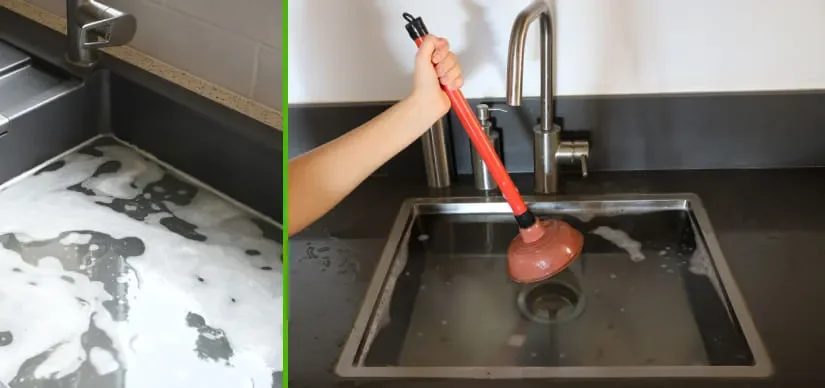
When your kitchen sink is clogged on both sides, you have a specific — and diagnosable — plumbing problem. A double sink clogged on both sides almost never means two separate blockages happened simultaneously. It almost always means the clog is at the shared drain junction: where both P-traps converge into the main drain arm, or deeper into the building drain system. Knowing this changes what you try first — and determines whether DIY will work or you need a drain cleaning plumber near me. EZ Plumbing USA's licensed plumbers have cleared thousands of kitchen drain clogs across Southern California. Here are the 10 causes we see most often — in order of frequency.
Why Both Sides of a Double Sink Clog at the Same Time
First, the anatomy: each basin has its own P-trap, but those P-traps connect to a shared horizontal drain arm before reaching the wall stub. A blockage at or after this junction backs up both basins simultaneously. If only one side clogs, the blockage is in that side's individual P-trap or trap arm — easy DIY fix. If both sides of the kitchen sink are clogged, the problem is in the shared section — harder to reach without the right tools.
Top 10 Causes — and Fixes
1. Grease Buildup in the Shared Drain Arm (Most Common)
Cooking grease poured down the drain solidifies as it cools, accumulating on pipe walls. Over months, this coating narrows the shared drain arm until flow is blocked entirely — causing both sides of kitchen sink to clog simultaneously. This is the cause in roughly 60% of double-sink clog calls we handle.
Fix: Hot water + dish soap for minor grease. For established blockages: power snake or hydro-jetting. Chemical drain cleaners are largely ineffective on solid grease — don't waste time or risk pipe damage.
2. Food Scraps at the P-Trap Junction
The junction where both P-traps meet the horizontal drain arm is a natural catch point. Rice, pasta, coffee grounds, and egg shells absorb water and expand — eventually blocking both kitchen sinks at once.
Fix: Remove and clean the P-trap assembly. Place a bucket under the trap, unscrew slip-joint connections by hand or with pliers, clear accumulated debris. Reinstall snugly — do not over-tighten plastic slip joints.
3. Garbage Disposal Failure or Clog
A jammed or partially-failed disposal creates drain backup in both basins — the disposal's drain tube can completely prevent drainage on both sides when blocked. A running disposal that drains slowly indicates the blockage is downstream of the disposal, in the shared drain arm.
Fix: First, check if the disposal is jammed — use the hex key (⅙" Allen wrench) at the center bottom to manually free the grinding plate, then press the reset button on the disposal's underside. If it runs but drains slowly, the downstream drain arm needs snaking. Call a plumber if the disposal's internal drain outlet is blocked — this requires removal of the unit to clear properly.
4. Missing or Cracked Basket Strainer
A damaged basket strainer allows unrestricted food debris into the drain. In households that don't pre-rinse dishes, accumulated debris creates the typical clogged kitchen double sink scenario within weeks.
Fix: Replace the strainer basket — $3–$8 at any hardware store. Best preventive maintenance investment for kitchen drains.
5. Soap Scum and Detergent Buildup
Dish detergent in Southern California's hard water reacts with dissolved minerals to create soap scum deposits on pipe walls. Monthly maintenance with boiling water flushes prevents accumulation. For established deposits, a drain snake with a brush attachment or hydro-jetting is effective. Installing a water softener dramatically reduces formation rate.
6. Vent Stack Obstruction — Air Lock
When both sinks drain very slowly (but don't back up completely) and you hear gurgling, the problem may be ventilation rather than a physical blockage. Drain vents allow air into the system so water can drain freely. A clogged roof vent creates negative pressure that slows drainage system-wide — your kitchen sink backing up on both sides may have no physical debris blockage at all.
Fix: A plumber inspects and clears the vent stack from the roof. Do not attempt this without proper fall protection.
7. Main Sewer Line Obstruction
If other drains (bathroom sink, tub, floor drain) are also slow in addition to your kitchen sink clogged on both sides, the problem is in the main sewer line — not just the kitchen. This is a plumbing emergency.
Fix: Call a plumber near me immediately. Stop running water in the house — main line blockages can force sewage backward into lower fixtures. A sewer camera inspection identifies the obstruction (often root intrusion), then cleared with a root-cutting auger or hydro-jetting.
8. Undersized or Corroded Old Drain Pipes
Kitchen sinks require 1.5" drain lines. Pre-1960 homes in San Diego, Los Angeles, and Riverside neighborhoods may have 1.25" lines — simply undersized for modern usage. Galvanized drain pipes in these homes also corrode from the inside, progressively narrowing effective diameter until both kitchen sinks clog with minimal debris loads.
Fix: Pipe replacement — targeted kitchen drain upsizing or whole-system repiping depending on condition.
9. Dishwasher Drain Connection Issues
The dishwasher drain connects to either the garbage disposal or the kitchen drain. Debris buildup at this fitting or a kinked drain hose restricts flow in the combined drain system — especially noticeable when the dishwasher runs. The required high-loop under the counter (prevents backflow from sink into dishwasher) must be intact. See our guide on cleaning your KitchenAid dishwasher filter — a clogged dishwasher filter compounds drain system congestion.
10. Improper Garbage Disposal Usage
The most common cause of recurring kitchen sink clogs on both sides. Items that should never enter a garbage disposal:
- Fibrous vegetables: Celery, artichokes, corn husks — wrap around the grinding plate
- Starchy foods: Pasta, rice, potato peels — expand and create paste-like blockages in the drain arm
- Grease and cooking fat: Always solidifies downstream, regardless of disposal
- Coffee grounds: Dense sediment accumulates in the trap
- Eggshells: Fragments accumulate and bind with grease
DIY First Steps for Both Sides Clogged
- Boiling water flush: 2–3 quarts per drain, wait 5 minutes — clears fresh grease
- Baking soda + vinegar: ½ cup each per drain, wait 30 min, flush hot water — effective on soap scum
- Plunge with a flat plunger: Cover one drain opening with a wet cloth; plunge the other aggressively 30 seconds — pressure can dislodge shared-arm blockages
- Remove and clean the P-trap: Bucket underneath, unscrew slip-joint nuts, clear debris
- 25-foot hand snake: Fed through the wall stub cleanout to reach blockages in the main drain arm
If these steps don't clear both kitchen sinks clogged, the blockage is in the main drain line — requiring professional hydro-jetting or power snake equipment.
FAQ
Why does my kitchen sink clog on both sides at the same time?
It's virtually never two separate blockages. When both kitchen sinks clog at the same time, the blockage is at the shared drain junction or further downstream. The #1 cause: grease buildup in the shared horizontal drain arm.
Should I use Drano when both sides of my kitchen sink are clogged?
We strongly advise against it. Chemical drain cleaners are largely ineffective on kitchen grease and food blockages. Worse: if the drain is completely blocked, caustic liquid pools in your P-trap and pipes — potentially damaging PVC fittings and making the plumber's job significantly more hazardous when they need to remove the trap. Use the mechanical methods above instead.
Get Professional Drain Clearing — EZ Plumbing USA
If both sides of your kitchen sink are backed up and DIY hasn't worked, it's time for professional drain clearing. EZ Plumbing USA provides same-day drain cleaning near me with power snake and hydro-jet equipment across San Diego, Orange County, Los Angeles, and Riverside. Call (619) 439-1818 — 24/7 for drain emergencies.
Category
Recent Posts